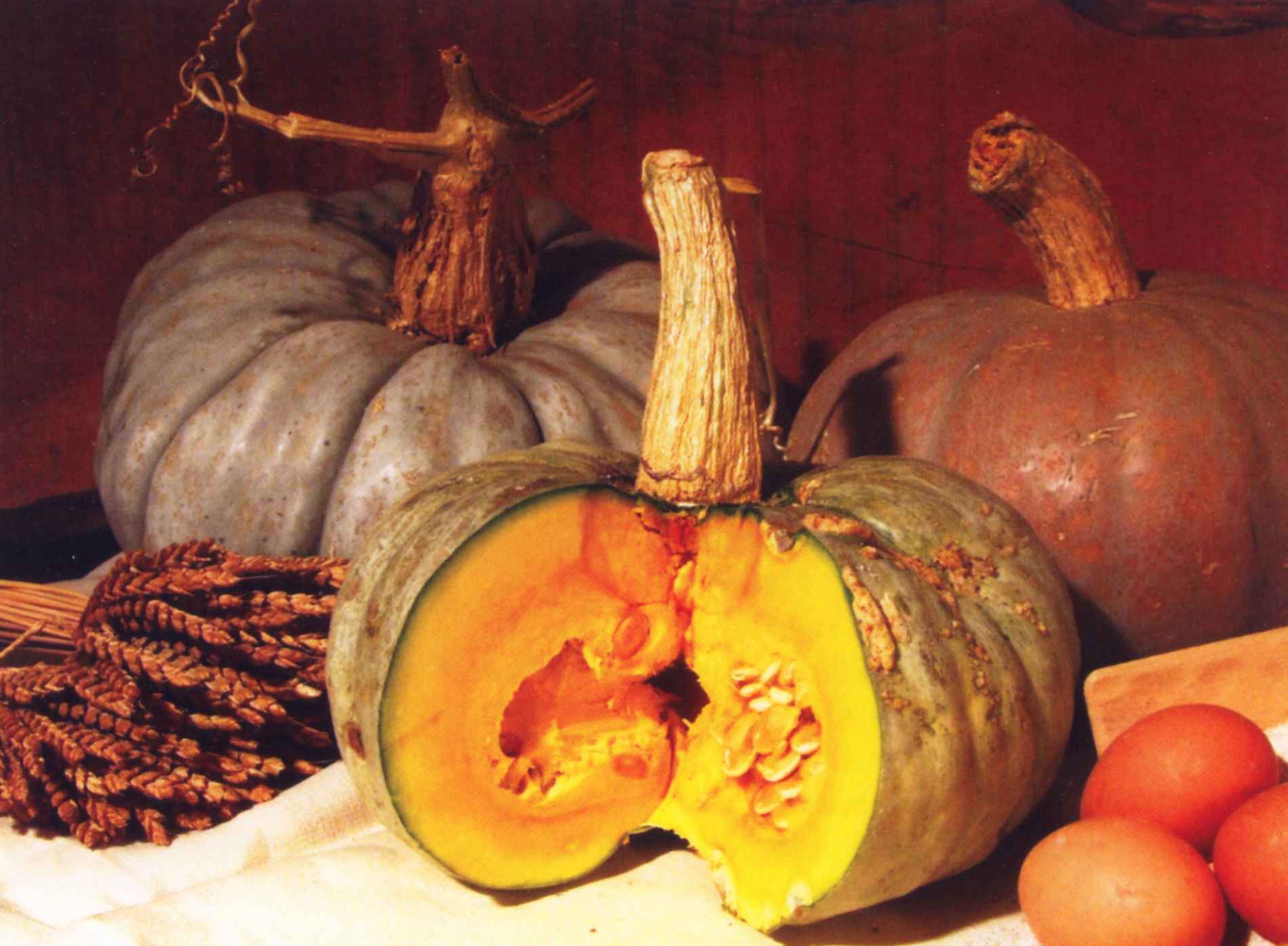
Santa Bellunese Pumpkin: A Culinary Treasure from Val Belluna
The Santa Bellunese pumpkin is much more than a simple vegetable; it represents a deep-rooted tradition and the strong bond between people and the land of Belluno. Grown in the valleys along the Piave River, this historic pumpkin has accompanied generations of farmers, becoming a staple food and a key ingredient in local cuisine.
For rural families, the Santa pumpkin was an essential resource. Its cultivation was closely linked to pig farming, as pumpkins were an excellent feed for livestock. At the same time, it held a place of honor on farmers’ tables. Grown alongside corn, both in fields and along their edges, its naturally sweet and nourishing flesh was used in a wide variety of dishes, from simple pumpkin gnocchi to more elaborate cakes and desserts.
The Santa Bellunese pumpkin is a winter variety, easily recognized by its large, flattened shape and hard rind mottled with shades of green, pink, and yellow. Its bright orange flesh has a delicate, sweet flavor. Extremely versatile in the kitchen, it can be baked, sautéed, boiled, used in soups or creamy risottos, and is especially prized for traditional pumpkin gnocchi, a signature dish of the Belluno area.
Every year, this exceptional product is celebrated in Caorera, a hamlet of Setteville, during the Santa Pumpkin Festival. The event attracts visitors from across the region, offering tastings of traditional pumpkin-based dishes, workshops, and opportunities to discover the cultural heritage surrounding this vegetable. Grown locally using traditional methods and with great respect for the environment, the Santa Bellunese pumpkin is a true zero-kilometer product. Choosing it means bringing authentic history and tradition to the table—a heritage worth preserving and promoting.
The Santa Bellunese pumpkin is available at local markets and directly from producers in the Val Belluna area, especially during the autumn season.